The top 4 reasons why you link your site to the Google Analytics today
In today’s hyper-competitive digital landscape, data is no longer optional—it’s the heartbeat of every successful website. Whether you run a blog, an online store, or a local business site, your ability to understand and act on user behavior determines how fast you grow, That’s exactly where Google Analytics comes in.
By linking your website to this powerful tool, you unlock a treasure chest of actionable insights: where your visitors come from, how they interact with your pages, and which strategies bring you the highest return. In 2025, ignoring Google Analytics isn’t just a missed opportunity—it’s a risk that could leave you blind in a world driven by data.
In this article, we’ll break down the top four reasons why you should link your site to Google Analytics today, supported by expert insights and resources. Each section dives deep into a key benefit, giving you a practical roadmap to elevate your online presence.



The Four Essential Steps to Maximize Your Website with Google Analytics
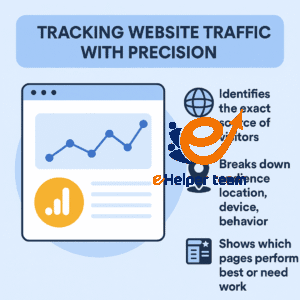
1. Tracking Website Traffic with Precision
One of the most compelling reasons to connect your site with Google Analytics is the unmatched ability to track website traffic in real-time. Unlike old-school metrics that simply count visitors, Google Analytics goes deeper:
It shows you the exact source of traffic (organic search, social media, email campaigns, or paid ads).
It breaks down user demographics such as location, device type, and browsing behavior.
It highlights which content performs best and which pages need improvement.
For businesses looking to scale, this level of detail is invaluable. For example, if you discover that most of your traffic comes from mobile users, you can optimize your site for speed and mobile design.
To expand on this, many marketers in 2025 are turning to social media traffic analysis tools to complement their efforts. Combining these tools with Google Analytics gives you a 360-degree view of how users engage with your brand across different platforms.
This seamless integration ensures you don’t just measure traffic—you understand it, refine it, and leverage it for growth.
2. Boosting SEO with Data-Driven Insights
Search engine optimization (SEO) remains a cornerstone of online success. But here’s the truth: you can’t improve what you don’t measure. Linking your site to Google Analytics gives you the data you need to fine-tune your SEO strategy.
Through features like organic search performance reports and behavior flow, you can see:
Which keywords bring in traffic.
How long visitors stay on each page.
Which blog posts or landing pages lead to conversions.
Pairing this data with external tools like Ahrefs or its alternatives for 2025 makes your SEO unstoppable. But Google Analytics remains the anchor because it connects keyword insights directly with user actions on your site.
Even beginners can benefit. As explained in this SEO basics for beginners guide, learning how to interpret analytics reports early is the key to avoiding guesswork and building a strong foundation for rankings.
3. Understanding User Behavior to Improve Engagement
Knowing how much traffic your website gets is only half the story. The real magic of Google Analytics lies in its ability to decode user behavior.
With features like heat maps, bounce rates, and session duration, you can see exactly where visitors lose interest. For example:
Are they dropping off after the first paragraph of your blog?
Do they abandon your shopping cart before checkout?
Are certain call-to-action buttons being ignored?
By identifying these friction points, you can make targeted changes that keep visitors engaged longer.
This is especially critical in 2025, where attention spans are shorter than ever. In the context of local businesses, user engagement data can transform your strategy. Insights from the local success website design guide show how entrepreneurs can leverage Google Analytics to monitor customer behavior, improve local search presence, and boost conversions.
This isn’t just about numbers—it’s about creating an experience that resonates with your audience and keeps them coming back.
4. Measuring ROI and Driving Smarter Decisions
At the end of the day, every website owner wants one thing: a return on investment (ROI). This is where Google Analytics shines the brightest.
By setting up conversion goals and tracking eCommerce performance, you can measure how much revenue each campaign, blog post, or ad actually generates. No more guessing—just cold, hard data.
Imagine running two ad campaigns. One brings in thousands of clicks but zero sales, while the other attracts fewer clicks but converts like crazy. Without analytics, you’d probably pour more money into the wrong campaign. With Google Analytics, you instantly know where to double down.
This principle also applies to backlinks and SEO strategies. Not all backlinks are equal, as highlighted in backlinks advantages and disadvantages insights. By monitoring referral traffic in Google Analytics, you can pinpoint which backlinks drive meaningful results versus those that just inflate numbers.
The smarter your decisions, the faster your growth. And in 2025, businesses that fail to adopt a data-first mindset risk falling behind competitors who make every move strategically.
The Future of Google Analytics
As technology evolves, so does the way we track and understand online behavior. In 2025, Google Analytics continues to stand as the cornerstone of website performance measurement, but its evolution into Google Analytics 4 (GA4) marks a significant shift in how businesses analyze data.
Unlike the older Universal Analytics, GA4 is designed for a privacy-first, event-based world. Instead of focusing solely on pageviews and sessions, GA4 emphasizes events, allowing you to capture every meaningful interaction a user has with your website or app. This provides a more complete picture of customer journeys across devices and platforms.
Key Features of GA4 in 2025
AI-Powered Insights – GA4 leverages machine learning to predict trends, such as which customers are likely to purchase or churn. This gives businesses the ability to act proactively rather than reactively.
Cross-Platform Tracking – With users frequently switching between mobile apps, websites, and even smart devices, GA4 unifies data across platforms to ensure you never lose sight of the customer journey.
Improved Privacy Controls – In an era of stricter data regulations (like GDPR and CCPA), GA4 provides businesses with flexible data retention settings and consent management features.
Deeper Integration with Google Ads – Campaign attribution is more accurate than ever, helping marketers understand which ads truly drive ROI.
Why This Matters for Businesses
The future of analytics isn’t just about measuring clicks—it’s about understanding intent. With GA4, businesses can answer more strategic questions:
What types of users are most valuable?
Which campaigns drive long-term engagement rather than just quick visits?
How can predictive data inform future marketing decisions?
For small businesses, GA4 also levels the playing field by making advanced features (like funnel analysis and predictive modeling) more accessible.
In short, the future of Google Analytics is about smarter, AI-driven insights that adapt to a multi-device, privacy-conscious world. Those who embrace GA4 in 2025 and beyond will gain a competitive edge, not just by tracking performance, but by predicting and shaping it.
FAQs About Linking Your Site to Google Analytics
Q1. Is Google Analytics still free in 2025?
Yes, the standard version of Google Analytics remains free, while GA360 offers advanced features for enterprises.
Q2. Can I use Google Analytics with other SEO tools?
Absolutely. Pairing it with tools like SEMrush, Ahrefs, or SEO alternatives creates a more robust analysis.
Q3. How does Google Analytics improve website conversions?
It identifies bottlenecks in user journeys, highlights which campaigns work, and allows you to refine CTAs and design.
Q4. Do small businesses need Google Analytics?
Yes. As highlighted in the local success guide, even local businesses gain massive benefits from tracking user behavior.
Q5. How many times should I check Google Analytics reports?
Ideally weekly, but during campaigns, daily check-ins ensure quick adjustments.
Q6. Is Google Analytics enough on its own for SEO?
No. It’s best used alongside keyword research and backlink tracking tools. But it remains the foundation for connecting traffic data with on-site performance.
Conclusion: Don’t Wait—Link Your Site Today
The digital world moves fast, and 2025 is no exception. Standing out requires smart decisions backed by real data, not assumptions. Linking your site to Google Analytics empowers you to:
Track traffic with precision.
Optimize SEO strategies.
Improve user engagement.
Measure ROI effectively.
Whether you’re a beginner learning the ropes or a seasoned marketer scaling campaigns, this tool is non-negotiable. The sooner you connect, the sooner you’ll see results that matter.